
Town of East Hampton City Directory Collections
There is no verified, stable online run of Town of East Hampton Polk, criss-cross, or telephone city directories. That gap matters. A responsible Town of East Hampton city directory search identifies the source that actually exists, its geographic scope, and its date. The useful local shelf includes digitized newspapers and yearbooks, library holdings, assessment material, a Village owner map, maps, deeds, and census records. Each source provides a narrow kind of evidence rather than a complete list of everyone who lived in the Town.
| Collection | Years | Where held | Access |
|---|---|---|---|
| East Hampton newspapers and yearbooks | 1881 forward | East Hampton Public Library archive | Digitized online |
| Long Island Collection | 17th century to present | East Hampton Library | Research area and direct inquiry |
| Village Property Line Map | 1955 | Digital Long Island | Digitized, 15 double-page sheets |
| Federal census | 1790 forward | National Archives | Historical release under the 72-year rule |
| Assessment-roll material | Confirm item year | Digital Long Island and library | Check title, scope, and page |
Use the Town, Village, hamlet, or county label exactly as the item gives it. East Hampton Village and Sag Harbor are separate municipalities, and a title using a postal place name may not cover the whole Town. The East Hampton Library Long Island Collection is the best first contact for a question about printed telephone or criss-cross volumes because the exact title and year runs were not verified in the online research.
Town of East Hampton Directory Gap
The missing single-volume directory is useful information, not a reason to fill gaps with assumptions. The New York State Library has a statewide city-directory guide, but the catalog text reviewed did not establish a dedicated Town of East Hampton or Suffolk run. Do not substitute a generic Long Island or Southampton volume without first checking its stated coverage. A name in a nearby directory can be a lead, but it is not evidence that the person lived in the Town of East Hampton.
Ask the library for a title, publisher, year, and place coverage. Also ask whether the item is a telephone book, criss-cross volume, assessment roll, or a collection of clippings. Those labels change what a result can show. A criss-cross volume may be organized by address, while a yearbook can only establish a school connection in its published year.
For each candidate volume or scan, create a small source entry before reading names from it: title, publisher, year, Town or Village coverage, repository, page or image, and access condition. A printed street name without that context can belong to another municipality or a narrower part of the Town. If the library locates a volume, preserve the title page and abbreviation key as well as the individual entry. They explain what the collection promises and what its short labels mean.
Note: A source record needs its date and jurisdiction before it can support a household history.
Town of East Hampton City Directory Newspapers
The East Hampton newspaper and yearbook archive begins in 1881. It can connect a name with a school, public event, business, obituary, civic role, or property reference. Read the full notice rather than extracting a name alone. The issue date, page, and surrounding text may show whether the item names a resident, a visitor, an organization member, or someone who had already moved away.
The screenshot below captures the digitized newspaper and yearbook archive used for this Town of East Hampton city directory route.
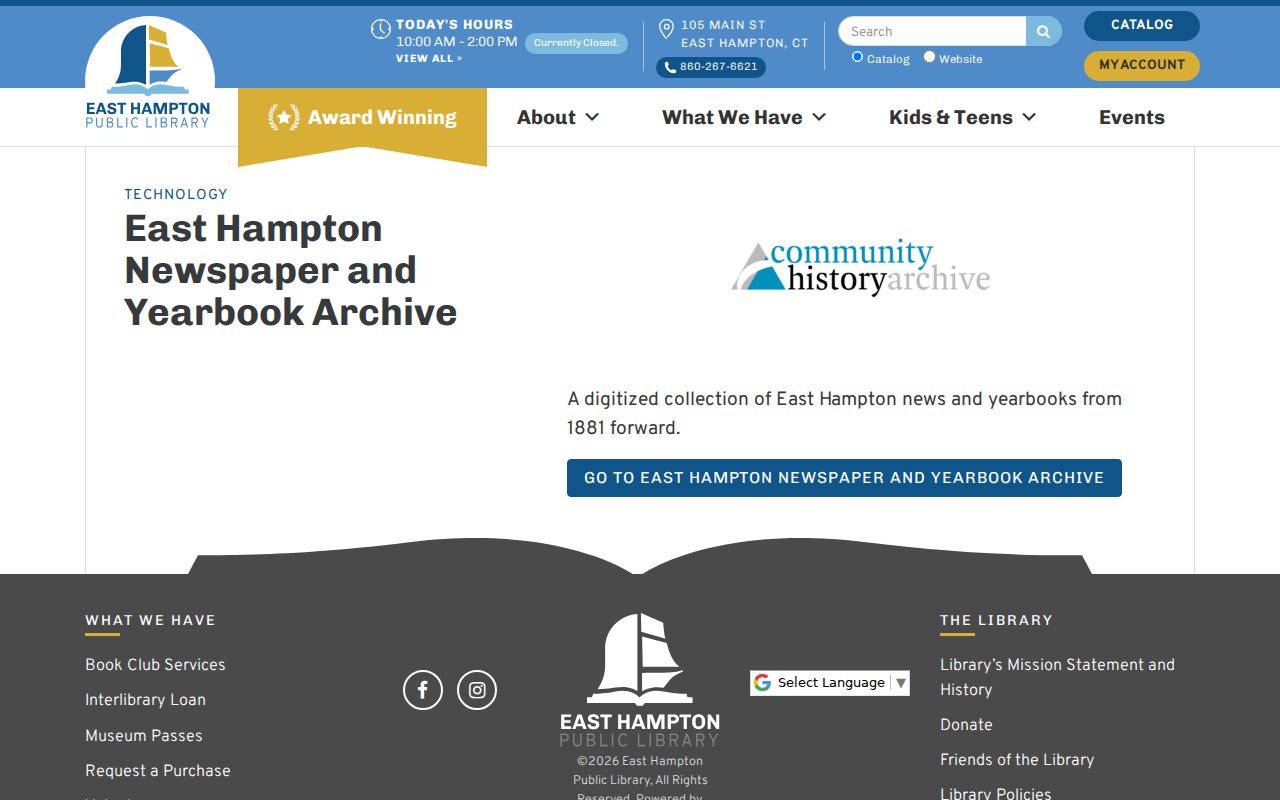
Search results from a newspaper or yearbook should be logged with the exact issue or school year, then compared with a dated map, assessment entry, or census record before adding it to a family timeline.
Newspapers are especially useful between census years. They also preserve local vocabulary that can improve a later catalog search, including a hamlet, school, ship, farm, street, church, or civic group. A school appearance does not prove a current or continuing address. Treat it as a dated historical appearance only.
Town of East Hampton City Directory Map
The 1955 Property Line Map of the Village of East Hampton offers a different kind of directory evidence. It prints owner names by block and property line, while newspapers and yearbooks tell a story around a name. The map contains 15 double-page sheets and no master index. It covers East Hampton Village, not the entire Town, so it is a strong local comparison tool only after the municipal boundary is confirmed.
Start with a street or block from another dated record. Find the matching map sheet, record the printed owner and page, then compare the result with an assessment roll or deed. Do not turn an owner label into an occupant claim. The distinction is essential when tracing a household.
Town of East Hampton Library Shelf
The library's Long Island Collection reaches from the 17th century to the present and includes deeds, wills, genealogies, diaries, account books, photographs, maps, oral histories, newspapers, and architectural material. Its five-room research and study area offers public research hours Monday, Tuesday, and Thursday through Saturday from 1:00 to 4:30. Appointments are recommended outside those hours. Contact the collection at lic@easthamptonlibrary.org or 631-324-0222 extension 4, and confirm current access before a visit.
The library research guides point to Jeannette Rattray's local history, Henry P. Hedges's town history and town records, maps, genealogies, and the East Hampton Star archive. These volumes are finding aids. A family statement in a historical narrative should be checked against the cited primary record when possible.
The collection also holds unusual local materials, including the 1599 Gardiner family Bible and an original Shelter Island deed. Those artifacts make the library a rich lead source for a Town of East Hampton city directory investigation, but an artifact connection alone does not establish residence.
Reading Town of East Hampton City Directories
When a source behaves like a directory, capture the fields it actually prints. A newspaper notice, map label, assessment line, and census entry use different vocabulary. Preserve the person’s role, the date, the geographic label, and the page or image. That approach keeps a Town of East Hampton city directory search from silently treating an owner, occupant, student, civic member, and relative as the same thing.
| Name | Copy the spelling as printed, including initials or variants. |
|---|---|
| Role | Record owner, occupant, student, public civic participant, or another stated role. |
| Place | Keep the street, hamlet, Village, Town, or county wording used by the source. |
| Date and citation | Save the year or issue date with page, image, map sheet, or archive identifier. |
| Source condition | Note whether the item is a map, index, scan, assessment roll, or newspaper notice. |
- Criss-cross directory
- An address-ordered directory that can place names by street when a verified volume exists.
- Householder index
- A list arranged around the named head of a household, not a guarantee that every occupant appears.
- Abbreviation key
- The volume’s explanation of short marks and roles. Photograph or copy it before interpreting an entry.
Trace Town of East Hampton City Directories
A household trail becomes more reliable when each source fills a separate time gap. Start with the earliest secure appearance, then move forward. The public National Archives census overview explains that the federal series begins in 1790 and releases historical schedules under a 72-year rule. The 1950 census is the latest broadly public federal census in this framework. Use the census for household composition and historical geography, not as a live directory.
- Find the earliest dated local appearance and record the source, page, hamlet, and stated role.
- Search the next newspaper, yearbook, assessment, or map date rather than assuming the name stayed put.
- Pair directory-like dates with the closest public census year and compare the household information.
- Use a deed or assessment source to test an owner claim, keeping ownership separate from occupancy.
- Close uncertain gaps with an obituary, probate file, or a library inquiry, and label the remaining uncertainty.
A person who disappears from one source may have moved, died, changed a surname, appeared under initials, or simply fallen outside the publication’s scope. The next source should be chosen because it can test one of those explanations, not because it repeats the same name search.
Town of East Hampton Digital Update
Digital finding aids are growing, but they do not turn the local historical record into one searchable directory. Preservation Long Island announced in February 2025 that more than 500 manuscripts spanning three centuries had become searchable through the East Hampton Library’s Digital Long Island material. The announcement names Colonel Smith’s 1776 Orderly Book as one example. This is a useful timely route for name, family, and place research when a printed directory is absent.
| 1648 | Town of East Hampton was founded, beginning the long local records setting. |
|---|---|
| 1881 | The East Hampton Public Library newspaper and yearbook archive begins. |
| 1955 | The East Hampton Village property map captures owner names by block. |
| 2025 | More than 500 manuscripts became searchable through the library’s Digital Long Island material. |
The screenshot below links to the Suffolk County Historical Society, a Riverhead museum, library, and archive with collections spanning more than three centuries. Its library hours are Wednesday through Saturday from 12:30 to 4:30, and Saturday visits need an appointment. Ask the librarian whether a surname, street, or collection series is indexed before expecting a ready-made resident list.
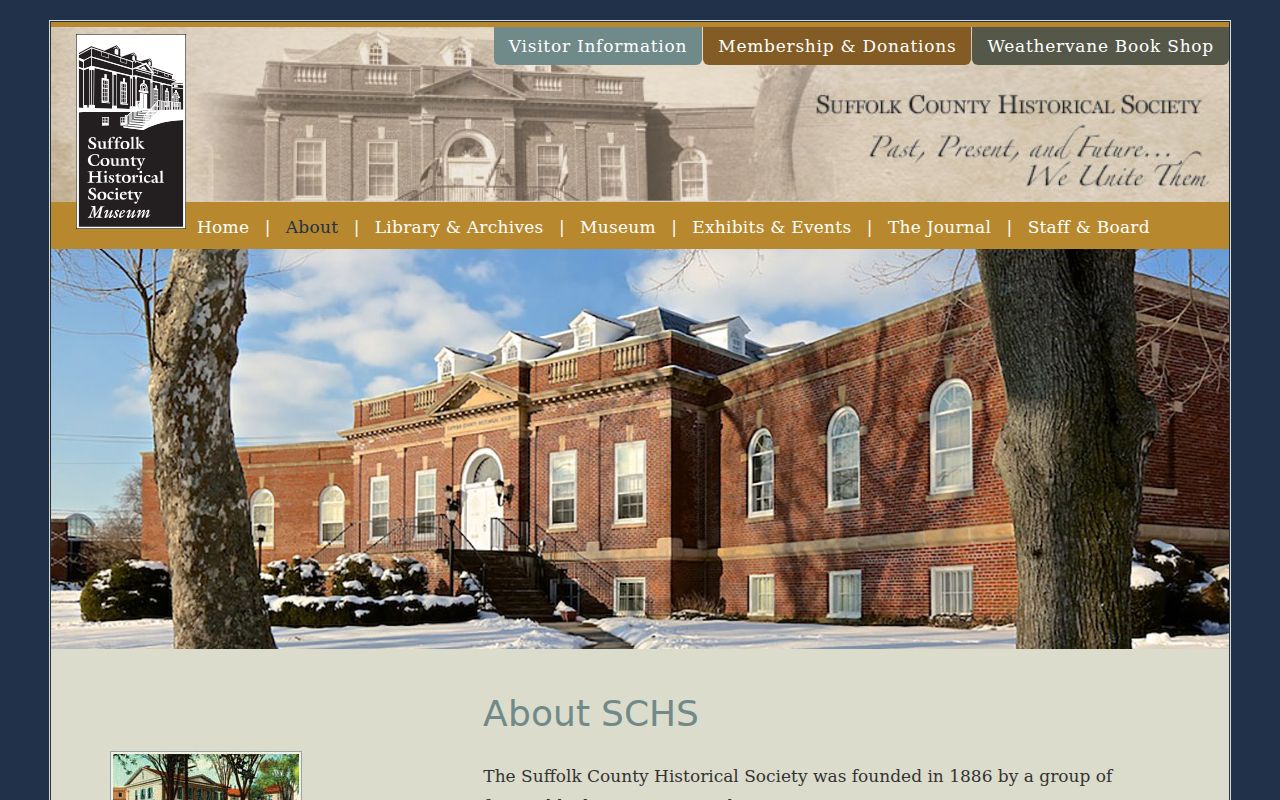
County archive material is most useful when its repository and scope are recorded beside the local source, especially for families who moved between a Town of East Hampton hamlet, East Hampton Village, and another Suffolk community.
Note: Newly searchable material still needs item-level date, rights, coverage, and context checks before it becomes evidence in a family history.