
Finding Town of East Hampton Residents
The Town of East Hampton has no official public roll of every current resident. A sound residents directory search follows the record that fits the question. For a present address, begin with the Town property tools and retain the parcel or tax-map identifier. For a historic name, a recorded deed, assessment material, newspaper, or archive item may be more useful. Town records also need a jurisdiction check because East Hampton Village and Sag Harbor keep separate municipal identities.
Use the result as evidence of the role actually shown. A deed party is a grantor or grantee, while a parcel page may show an assessed owner. Neither label proves a full household. The Town recognizes Amagansett, East Hampton, Montauk, Springs, and Wainscott as its hamlets, so add the hamlet when a search produces similar street names or postal descriptions.
- Confirm the hamlet, postal label, and municipality for the East Hampton address or name.
- Search the Town eGov tools by address or tax-map number, then save the displayed parcel identifier and source date.
- Use the Town or Suffolk map layers to confirm the parcel and the governing boundary.
- Search the Suffolk County Clerk index by tax map, address, party name, or recorded-instrument citation.
- For an older connection, compare dated library, newspaper, map, census, or genealogy material before drawing a conclusion.
Note: Record the exact jurisdiction and date with each East Hampton result, because the same postal name can point to different record custodians.
Town of East Hampton Jurisdiction Checks
East Hampton research starts with place names, not just a ZIP code. The Town includes five named hamlets, while incorporated East Hampton Village sits within the broader Town context. Sag Harbor is a separate village, and its 11963 postal area also reaches into the Town of Southampton. A mailing line that says East Hampton or Sag Harbor is therefore not enough to assign a record to the Town of East Hampton.
Use the Town hamlet list beside the Town map collection when normalizing an address. The maps provide Town-wide, zoning, district, and village-boundary context. They are not a substitute for the parcel record. For an unclear result, compare the map label, tax-map identifier, and agency named on the record.
Town of East Hampton Address Search
The Town Assessor maintains the annual assessment roll, ownership records, property inventory, district mapping, and the current E-911 street-address database. Its eGov portal offers three entry routes: Address, Tax Map Number, and Bill Number. That makes an address the best starting point when the aim is to anchor a name to a specific East Hampton parcel rather than a broad postal place.
East Hampton’s eGov instructions contain a useful local quirk. For an address search, enter the house number and street name without the street suffix, then review the candidate parcel before continuing. For a tax-map search, the instructions call for the SWIS code and the section, sub-section, block, lot, sub-lot, and suffix pattern from the bill; zeros can be omitted. Preserve the full official address and tax-map value once the correct record is found.
| East Hampton eGov route | Fields to enter | Useful result | Careful use |
|---|---|---|---|
| Address | House No and Street, without suffix | Candidate parcel and tax details | Confirm hamlet and municipality |
| Tax Map Number | SWIS plus section, sub-section, block, lot, sub-lot, suffix | Exact parcel anchor | Use the value shown on the tax bill |
| Bill Number | Bill number | Tax bill or receipt route | Keep the displayed source date |
The Town eGov portal illustrates the address and tax-map entry points used for an East Hampton residents directory search.
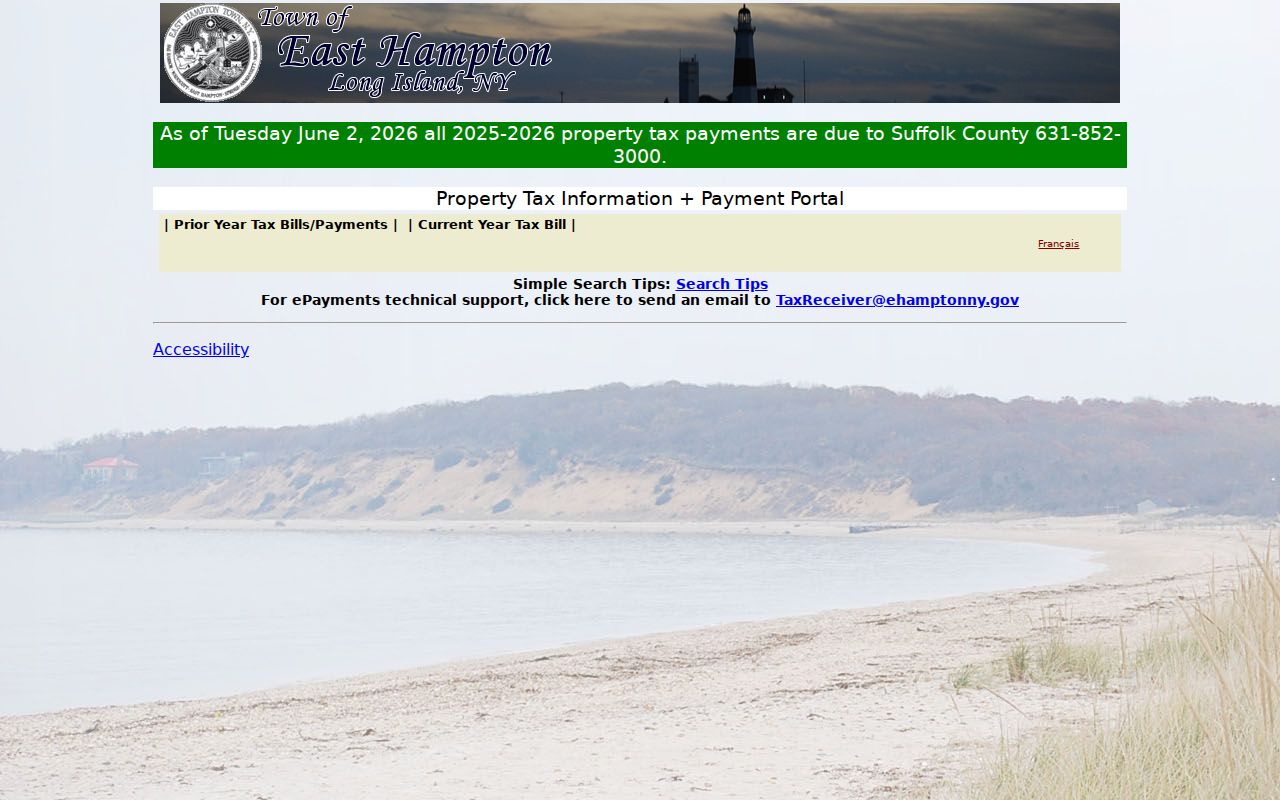
The form is a route to a property record, not a list of everyone connected to that address. Save the parcel key first, then compare records by their dates and stated roles.
Town of East Hampton Deed Index
The Suffolk County Clerk provides the county-level trail that connects East Hampton parcels to recorded land instruments. The Clerk says land records have been recorded and imaged online from 1987 to the present. Its online kiosk covers deeds, mortgages, liens, judgments, filed maps, naturalization indexes, and other record families. Free searching is useful for finding an instrument; image viewing or certified copies may be a separate paid step.
A tax-map search in the main kiosk accepts House Number, Street Name, and ZIP. A name search accepts last name or corporation, optional first name and suffix, a date range, and starts-with, contains, or exact matching. Results for a deed index can show the liber, page, document type, grantee, grantor, date received, notations, and document options. A mortgagee or lien claimant must never be relabeled as an owner.
Open the Suffolk County Clerk kiosk to start an East Hampton residents directory land-record search.
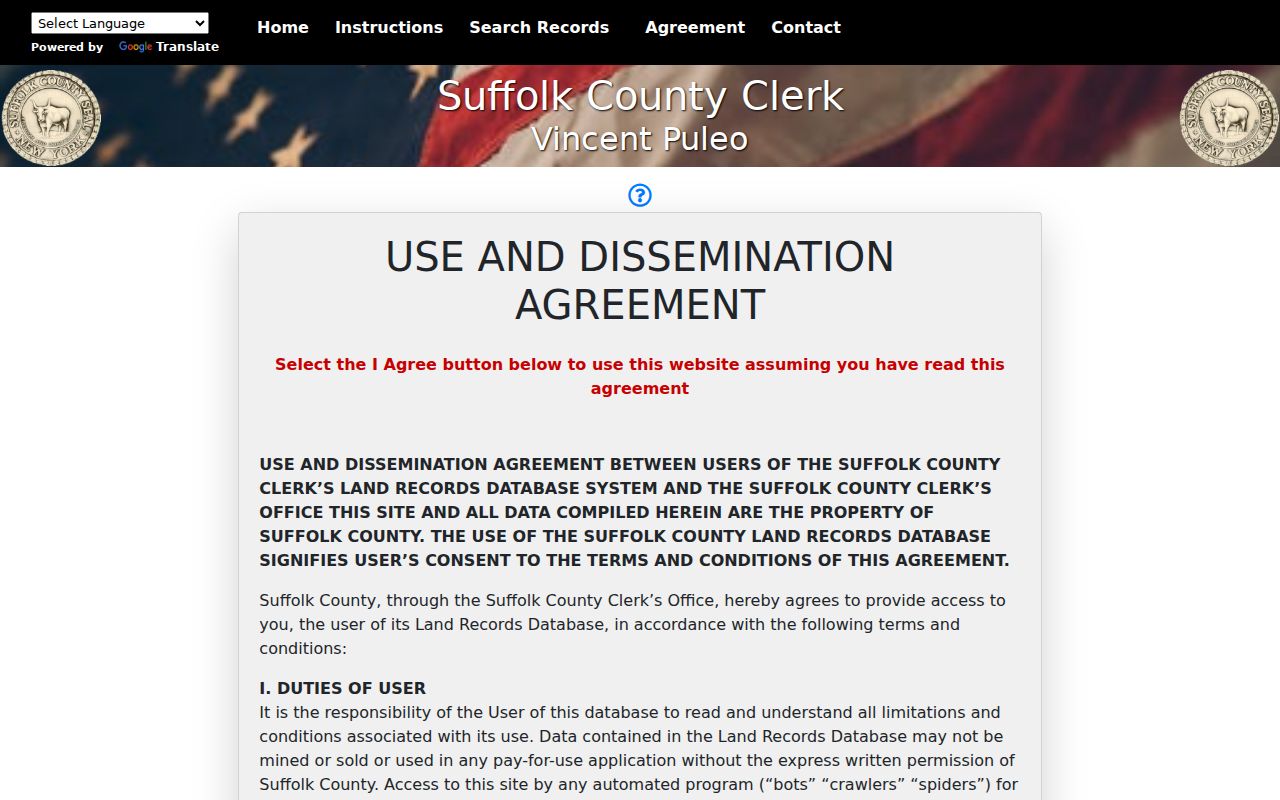
The kiosk gives a dated index trail. For a claim that depends on the instrument text, inspect the image or request the official copy through the Clerk instead of relying on the result row alone.
Note: Online imaging begins in 1987, so older East Hampton ownership questions may require deed books, filed maps, assessment rolls, library material, or a direct Clerk request.
Town of East Hampton Records Offices
Different East Hampton records are held by different custodians. The Assessor supplies the parcel and street-address framework. The Suffolk County Clerk holds the recorded land trail in Riverhead. Election records follow a distinct state process, and the Town Clerk routes local marriage and records-access matters. Start with the office that owns the record rather than asking one office to confirm every part of a name or address.
Town Assessor
300 Pantigo Place, Suite 108
East Hampton, NY 11937
631-324-4187
Suffolk Board of Elections
Yaphank Avenue, PO Box 700
Yaphank, NY 11980-0700
631-852-4500
The Town Clerk is at Town Hall, 159 Pantigo Road, and maintains local marriage-license transcripts. A request may be made by an eligible spouse, an official agency, or a person with judicial or proper purpose; the Town lists a $10 copy fee and identification requirement. The Town marriage-transcript route is a historical connection source, not a general household list.
Town of East Hampton FOIL Route
When an East Hampton record is not posted online, the Town’s Freedom of Information Law route is the documented fallback. New York FOIL is Public Officers Law Article 6, §§84–90. East Hampton’s local ordinance identifies the Town Clerk as the records-access contact and allows written requests by email, mail, or fax. The online form asks for a record description, and it can also take an address or SCTM number, contact details, and a department choice such as Building, Planning, Clerk, Assessor, IT/GIS, or Tax Receiver.
The Town ordinance calls for a response within five business days, permits privacy redaction and advance fee estimates, and allows an appeal to the Town Supervisor within ten business days. It lists 25 cents per page for copies up to 8.5 by 14 inches. Describe the record precisely and ask for the named record type, period, property identifier, or department file. That gives the custodian a usable request without treating a broad address search as a request for private material.
Use the Town FOIL request form for the department-specific submission route, then retain the request date, record description, response, and any redaction or fee notice.
Town of East Hampton Voter Search Limits
New York’s official voter lookup is an individual form, not a public residents directory browse. It asks for County, Last Name, First Name, Date of Birth, and ZIP Code. Suffolk is the county selection for Town of East Hampton research. A missing result can reflect an incorrect field, timing, protection, or another limitation, so it does not settle a person’s status or address.
Statewide or multidistrict voter data is requested through the New York State Board of Elections FOIL process and requires an elections purpose under Election Law §3-103. The state says those records are not for non-election purposes. Protected voter information also has separate restrictions. Keep a voter form result within the purpose and limits stated by the election authority.
The New York voter lookup shows the five fields required before a search is submitted.
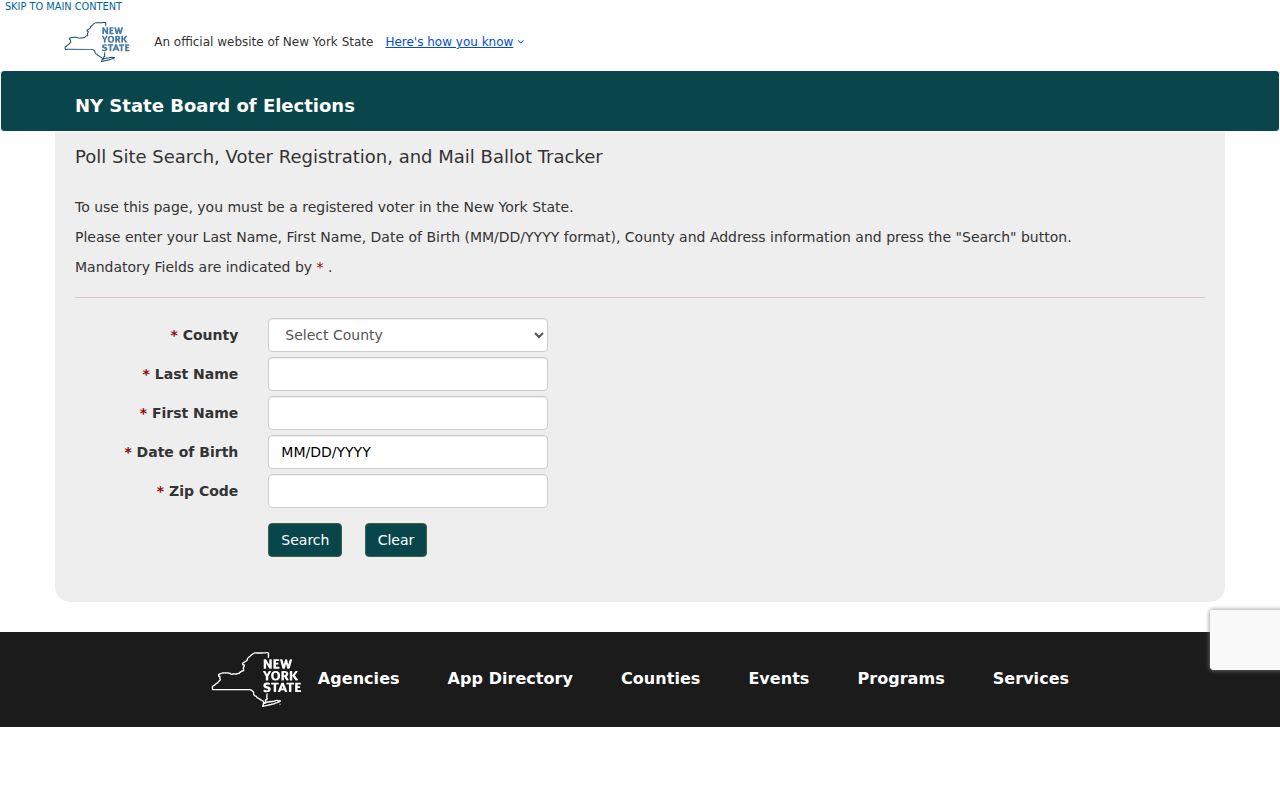
Use a voter result only as a purpose-limited, person-specific reference. Do not treat it as permission to build a roster or to reconstruct a protected address.
Current Town of East Hampton Directories
Current East Hampton resident information is distributed across records with different scopes. The parcel route answers an ownership or property question. The County Clerk index shows recorded legal roles. The voter form requires identifying fields and an allowed use. Court, license, and state claim systems answer narrower questions and may omit restricted matters. Treat the source title, date, and access condition as part of every result.
| East Hampton source | What it can establish | Custodian | Access route |
|---|---|---|---|
| eGov property route | Parcel and tax-bill context | Town Assessor and Tax Receiver | Address, tax-map, or bill search |
| County land index | Recorded grantor, grantee, and instrument roles | Suffolk County Clerk | Free index; image or copy route varies |
| Individual voter form | Person-specific election lookup | New York State Board of Elections | County, name, date of birth, and ZIP |
| Professional verification | License status and listed professional information | New York State Education Department | Online verification search |
| Town FOIL request | Non-posted Town records, subject to exemptions | Town Clerk | Written request with record description |
When the question is about one named person rather than a parcel, use the dates, roles, and corroboration approach on the East Hampton resident lookup page. A shared surname or postal line is not enough to resolve a match.
Town of East Hampton Tools Compared
Official sources often answer one narrow question well. A property page may anchor an address, while a state genealogy request may be the proper path for a historical vital event. The contrast matters in East Hampton because every source has its own identifiers, timing, eligibility rules, and record date. Use the right route instead of trying to make a convenient database prove more than it shows.
| Question | Best official route | What to retain |
|---|---|---|
| Which parcel matches an address? | Town eGov and GIS | Tax-map ID, municipality, source date |
| Who signed a recorded instrument? | Suffolk County Clerk index | Role, document type, received date, liber or page |
| Is a professional credential current? | NYSED verification | Profession, registration status, original date |
| Could a deceased owner have a state claim? | New York unclaimed funds | Claim route and relationship proof requirements |
The NYSED online verification searches can search licensed professions and display information such as license number, location, original date, registration status, and discipline summaries.
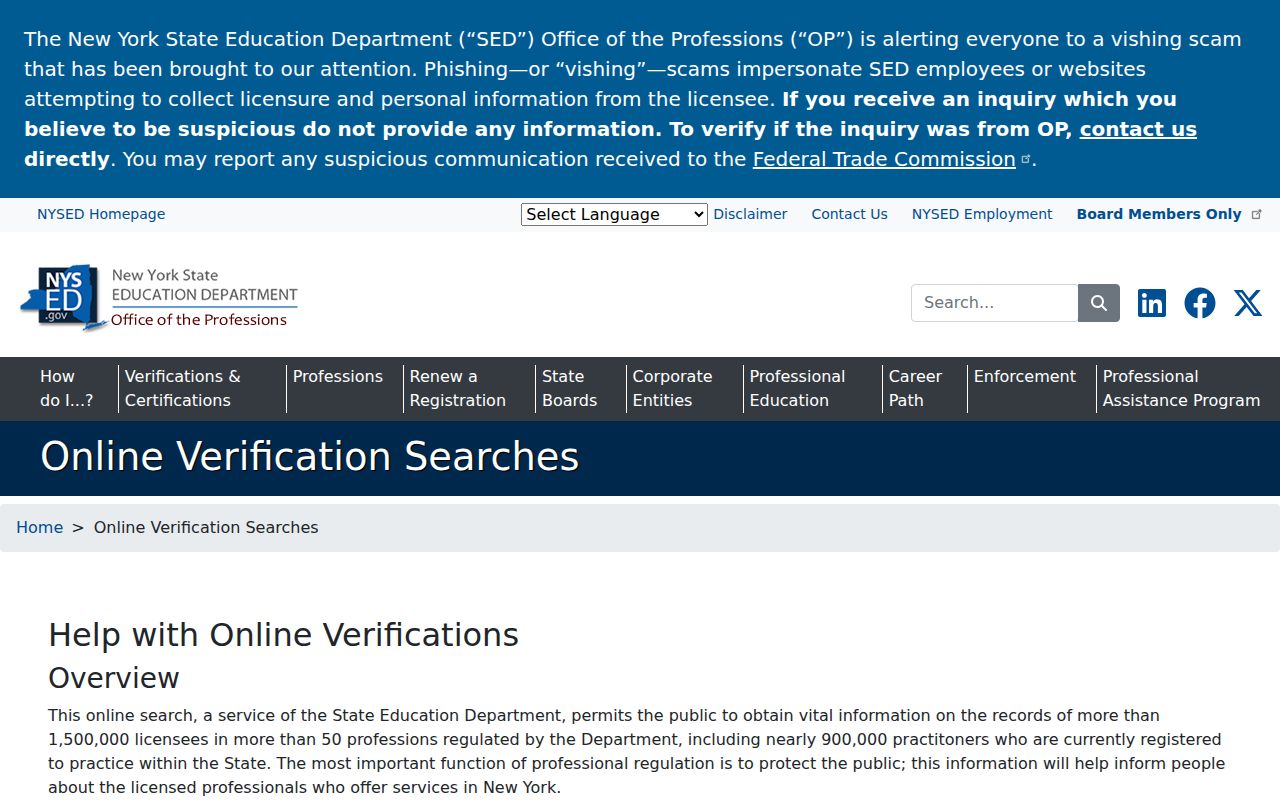
A license verification can confirm a credential record, but it should be cited as a license record, not turned into an unsupported current-residence statement.
Note: The Town lists a $10 local marriage transcript, while the State genealogy schedule starts at $22 for a one-to-three-year search, so the correct route depends on the record and eligibility.
Historical Town of East Hampton Directories
East Hampton’s historical directory evidence is a shelf of sources rather than one confirmed continuous city-directory run. The East Hampton Library’s Long Island Collection holds deeds, wills, genealogies, newspapers, maps, diaries, photographs, architectural material, and oral histories. Its research guides point to town records, family genealogies, local-history books, maps, and newspaper research. A name found in one item needs its year, page or image, and the exact role it records.
The local newspaper and yearbook archive begins in 1881. The 1955 East Hampton Village property map is another address clue, showing owners by block across 15 double-page sheets, but it covers the Village only and has no master index. The full collection trail, including how to read these dated materials, belongs on the East Hampton city directories page.
- Parcel
- A tax-mapped unit of real property used to connect an address, map, and recorded land trail.
- Index
- A finding tool that points to a record; it is not always the record image or a certified copy.
- Grantor and grantee
- The party transferring an interest and the party receiving it in a recorded instrument.
- Criss-cross directory
- A reverse address arrangement that can help trace a past address when a collection actually supplies one.
Town of East Hampton Record History
East Hampton was founded in 1648, and Suffolk County was established in 1683 as one of the twelve original counties of the Province of New York. That long history explains why a Town of East Hampton residents directory inquiry often crosses sources rather than finding one uninterrupted register. The Town Trustees point researchers to the library, whose named holdings include early deeds, diaries, account books, genealogies, whaling voyages, the 1665 Book of Laws, and the 1685 Indian Bible.
Nineteenth-century evidence includes Hedges’s 1897 town history and the local newspaper archive beginning in 1881. The 1909 Sanborn sheets add built-environment context, and the 1955 Village property map adds a block-level owner snapshot. County land records become easier to search online from the Clerk’s stated 1987 imaging start. Read each source as evidence from its own date, with a stated role and place, not as a universal history of a household.
Note: Older Town of East Hampton material is most useful when its publication date, page or image, municipality, and record type are preserved with the name.
Town of East Hampton Genealogy Routes
For a deceased person or family-history question, New York State Department of Health genealogy rules are often more appropriate than a current residents directory search. The state generally permits births after 75 years when the person is known dead, deaths after 50 years, and marriages after 50 years when both spouses are known dead. Direct-line descendants may have earlier routes with relationship and death proof. Processing may take eight months or longer, and the local registrar can sometimes be a faster first contact.
The New York genealogy program explains the historical access windows, ordering rules, and graduated search fees.
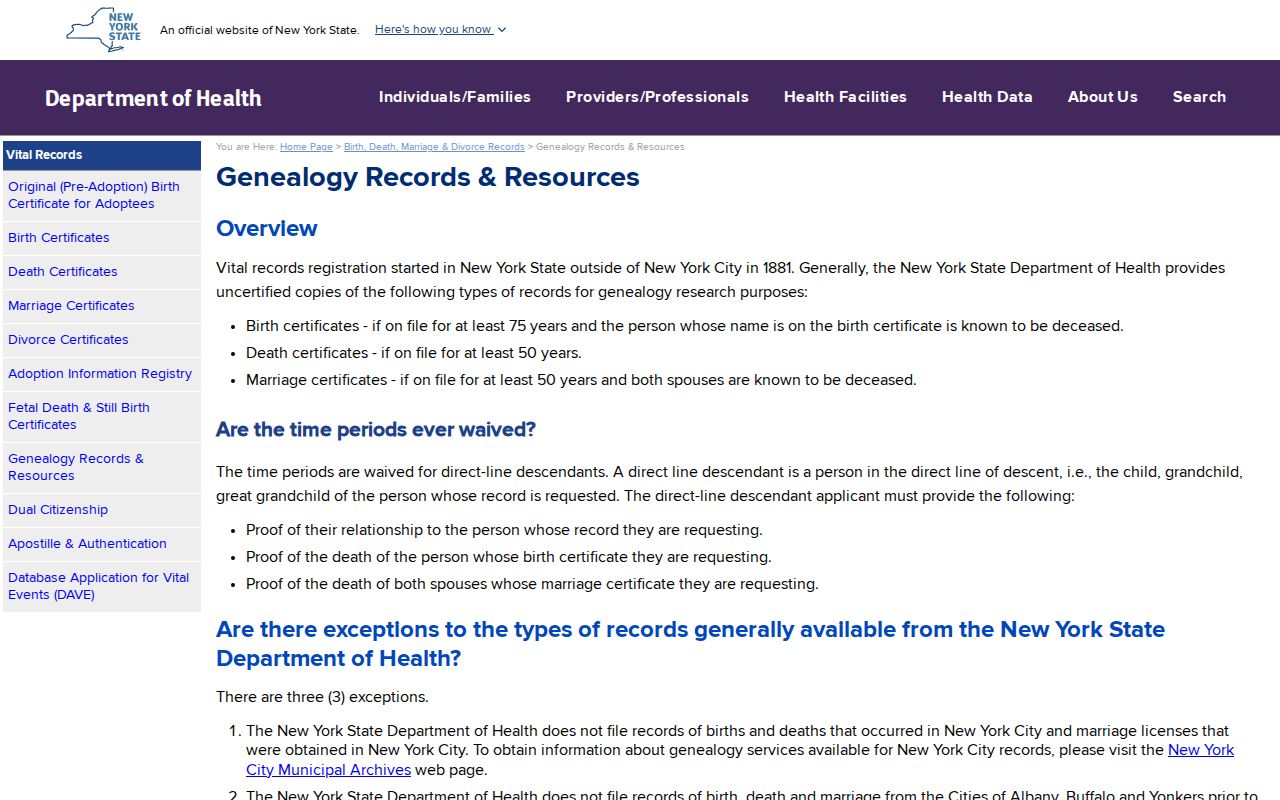
The form asks for a record type, facts about the event, relationship or capacity, requester details, delivery instructions, signature, and a death statement for some requests. It also says vital-record copies cannot be provided for commercial purposes.
Town of East Hampton Records Split
East Hampton uses Town eGov, ArcGIS, OpenGov, the Suffolk County Clerk kiosk, Town FOIL, and several state systems. That split is a practical search quirk, not a defect a reader should try to solve with assumptions. Each route has different fields, coverage, and update timing. The County Clerk notes that its free HOWL property alert may lag a new deed by eight to ten weeks, so the recorded instrument and received date remain the better evidence for a recent transfer.
New York’s unclaimed-funds search is another narrow, official name route. It permits free searching by a person or business and supplies a claim workflow that includes heirs and deceased owners when relationship and proof are required.
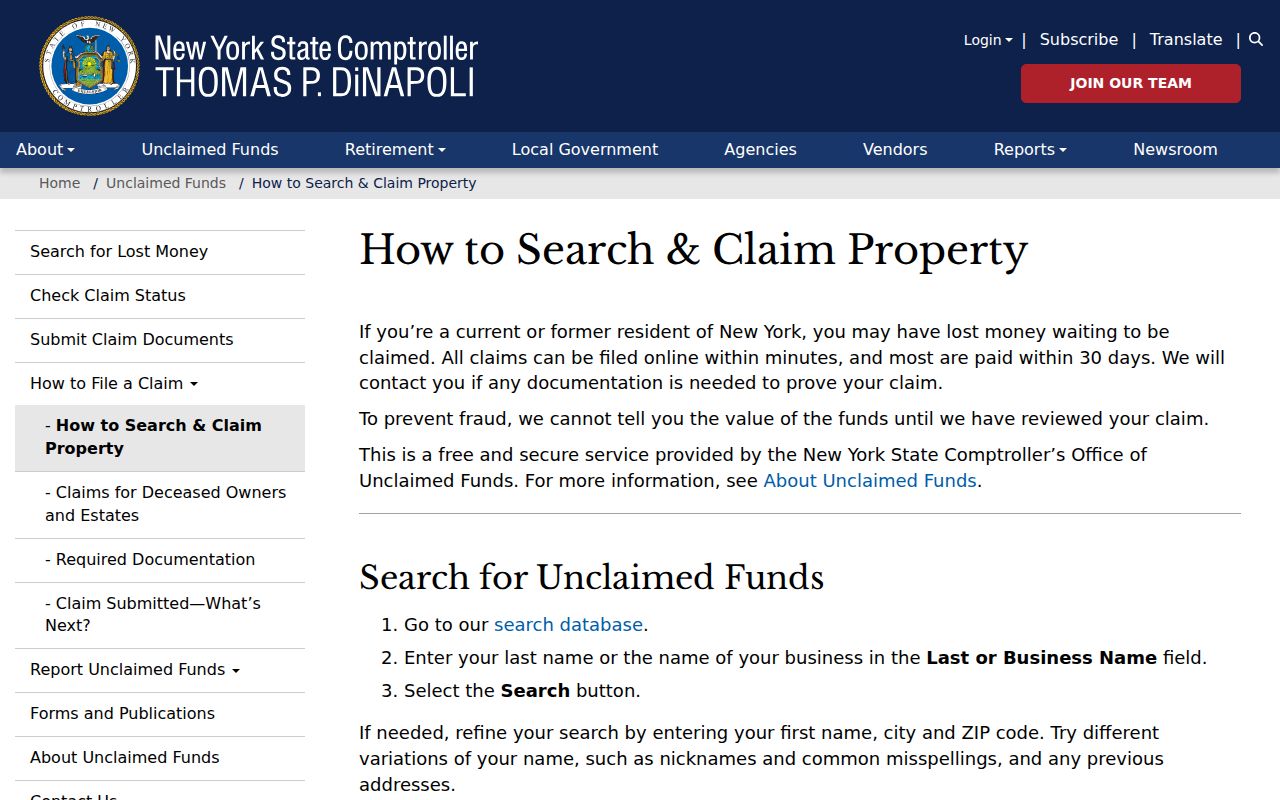
Unclaimed funds can open a legitimate estate or heir inquiry, but a search hit is not proof of identity. Keep the claim process, relationship evidence, and source date separate from the address record.
Note: A result is strongest when two independent, dated East Hampton records agree on the place and the role shown by each custodian.