
Town of East Hampton Previous Residents Sources
Previous residents research follows separate tracks for ownership, occupancy, and family context. The Town Assessor maintains ownership records, property inventory, Suffolk-conforming tax-map districts, and the E-911 street-address database. That current parcel anchor helps avoid a name-only mistake. The County Clerk then supplies the land-instrument trail, while historical maps, local publications, library materials, and census schedules add older place and household context.
| Source | Years it covers | Where held | What it shows |
|---|---|---|---|
| Suffolk County Clerk land records | 1987 to present online | County Clerk kiosk and Riverhead office | Deeds, parties, received dates, and instrument citations |
| Assessment-roll material | Confirm each item year | Library and Digital Long Island | Owner or occupant fields as printed, with local scope |
| Village Property Line Map | 1955 | Digital Long Island | Owner names by block in East Hampton Village |
| Newspapers and yearbooks | 1881 forward | East Hampton Public Library archive | Dated notices, public roles, and local references |
| Federal census | 1790 forward | National Archives | Historical household and geographic context |
Start with the source closest to the period in question. A recent ownership question normally starts with the parcel and deed index. A pre-1987 transfer needs a wider search through clerk books or indexes, filed maps, assessment rolls, library archives, historical societies, and direct clerk inquiry. A person may be connected to a parcel as a grantor, grantee, mortgagee, lien claimant, occupant, or neighbor. Preserve the role printed by the record instead of converting it into residence.
Town of East Hampton Previous Residents Online
The Suffolk County Clerk main search is the documented online starting point for land instruments. It supports tax-map address searching with house number, street name, and ZIP, plus tax-map ID, party name, date range, liber and page, maps, naturalization, and other index families. Name searching allows a last name or corporation, an optional first name and suffix, and Starts With, Contains, or Exact choices. For a parcel, retain the tax map ID, district, section, block, lot, instrument type, parties, received date, and liber/page or document identifier.
The Clerk states that land records have been recorded and imaged online from 1987 to the present. A free index result may not mean a free image or certified copy. The kiosk separates results from document viewing and certified-copy ordering. When an image is unavailable, use the County Clerk contact route for the Riverhead office, mail or in-person options, and any direct request. A later deed can also lag the index: the Clerk’s HOWL notice says a new deed may take 8 to 10 weeks to be recorded.
The screenshot below captures the County Clerk main search, the official index route for Town of East Hampton previous residents research.
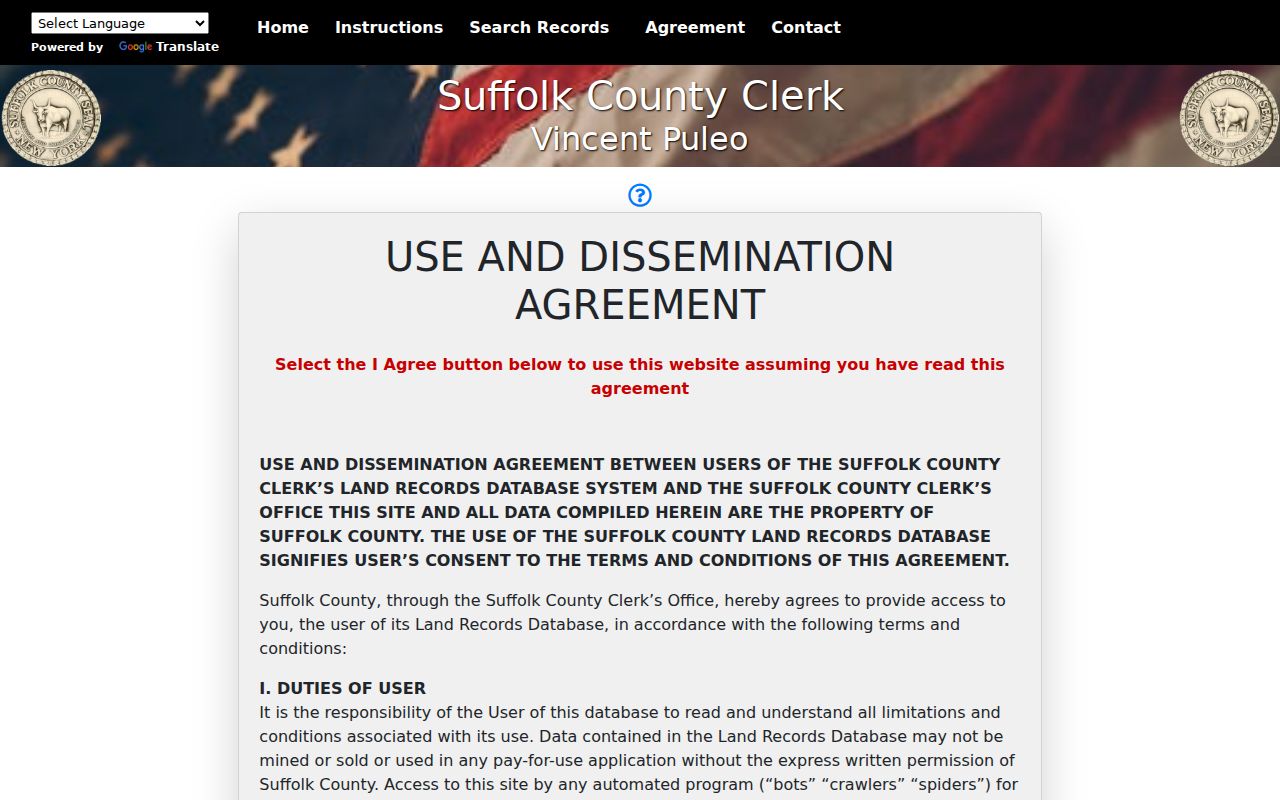
Use the screenshot as a route reminder, not as proof of a particular transfer. A result becomes useful only after the parcel, date, parties, and legal role agree with the historical question.
Town of East Hampton Address Records
The 1955 Property Line Map of the Village of East Hampton is a strong former-owner source for the incorporated Village. It has 15 double-page sheets, prints property lines and owners by block, and has no master index. That combination makes it useful for a known block or street, but poor for a blind surname search. It also cannot be extended to the whole Town without confirming the location.
Compare a map label with a dated assessment entry or deed before building a previous residents timeline. The owner printed on the sheet may not have occupied the property, and a street address can change in spelling or number over time. The map records a 1955 snapshot, not a continuous chain. This is a numbers-based research advantage: the 15-sheet format can narrow a known block, but its missing master index requires a second source to locate a family.
For building context, the Library of Congress 1909 East Hampton Sanborn map has four sheets. Sanborn material can show a building’s footprint, use, construction material, and hazards. It helps explain a place, but not who occupied it.
Town of East Hampton History Records
Older house research in the Town has an unusually long local record setting. Suffolk County was established on November 1, 1683, as one of the twelve original counties of the Province of New York, and the Town of East Hampton was founded in 1648. The Suffolk County history supplies that civic context. It does not make an old surname a homeowner, but it explains why a property question can lead beyond a deed index to early town, family, church, and commercial records.
Hedges's 1897 History of the Town of East Hampton is a digitized finding aid with family and civic references. Check its claims against a primary record because local histories can repeat tradition or leave out communities. The Town library’s early deeds, diaries, account books, genealogies, whaling records, and other holdings can then help test a historical connection. This story layer enriches a previous residents search without replacing the date-and-parcel trail.
Town of East Hampton Census Records
Federal census schedules add the household layer that deeds cannot supply. The National Archives explains that the federal census series begins in 1790 and that historical schedules are released under a 72-year rule. The 1950 census is the latest broadly public federal census in this research framework. Census records may show household composition, age, birthplace, occupation, and address or geography, depending on the schedule. They are historical evidence, not a current directory.
The National Archives census coverage image below is the source for that release framework.
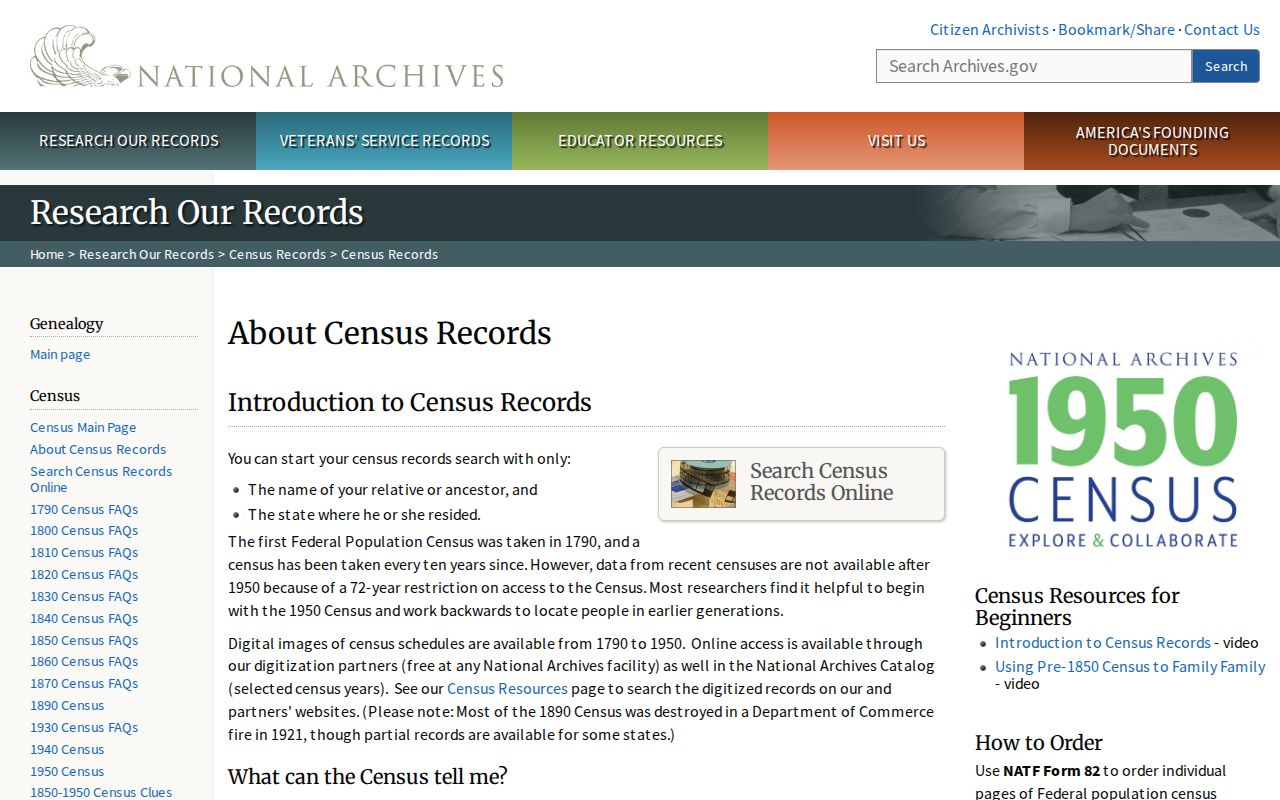
Pair a census household with a dated map, newspaper, assessment roll, or deed rather than relying on a similar name. A census can support family context, while the parcel trail tests whether the same address or place applies.
Note: Census geography, a street label, and a municipal boundary should all be recorded separately when a historical address lies near East Hampton Village or Sag Harbor.
Town of East Hampton Owner Records
The central comparison in a house history is owner versus occupant. The Assessor and the County Clerk can identify property and legal parties. A census, newspaper notice, or yearbook may identify someone at the address or in the community. Neither side cancels the other. An owner can live elsewhere, and a resident can be absent from the deed chain. A mortgagee, lien claimant, or business-certificate name is another legal or activity role, not proof of ownership or occupancy.
Build a short role ledger for each appearance: source, date, person, role, address or parcel, jurisdiction, and citation. It makes conflicts visible. It also prevents an appealing old map label from becoming a false claim about who lived in a Town of East Hampton house before. The Town of East Hampton city directory collections provide the documented newspaper, map, and library routes for the household side of that ledger.
Town of East Hampton Previous Resident Deeds
A chain of title is the sequence of recorded ownership transfers connected to one parcel. Begin with the current assessor or eGov parcel result, not merely a familiar street name. The Town’s eGov search tips specify House No and Street for address searches. They advise entering the number and street name without its suffix. Tax-map searching uses the SWIS code and section, sub-section, block, lot, sub-lot, and suffix from the tax bill, with zeros optionally omitted.
- Confirm the address, hamlet, municipality, and tax-map ID in the Assessor or eGov record.
- Search the County Clerk tax-map or party route for the current purchase deed and preserve its citation.
- Read the grantee and grantor roles, then search the prior owner as grantee to locate that earlier acquisition.
- Repeat backward, keeping document type, received date, legal description, and tax map with each link.
- When the online trail reaches its 1987 coverage boundary, shift to older clerk materials, filed maps, assessment rolls, library archives, or a direct clerk request.
- Grantor and grantee
- The grantor transfers an interest; the grantee receives that stated interest in the instrument.
- Chain of title
- A dated sequence of recorded transfers tied to one parcel, tested one link at a time.
- Legal description
- The parcel description in the instrument. It is often more durable than a street address when numbers or names have changed.
Town of East Hampton Household Records
After the parcel trail is stable, move to people-centered sources. The East Hampton Public Library newspaper and yearbook archive begins in 1881. Its notices can provide school, business, church, civic, obituary, or property context. The Long Island Collection adds deeds, wills, genealogies, maps, diaries, photographs, and oral histories. Ask the library whether it has a printed telephone or criss-cross directory for the exact Town, Village, hamlet, and year, because no stable Town of East Hampton-specific run was verified online.
- Choose a dated parcel event, map year, or assessment year as the household search point.
- Search the local archive for the name, street, hamlet, and related school, church, farm, ship, or civic terms.
- Pair the result with the nearest public census year and retain the printed household relationship or role.
- Use an obituary or probate record to test a death, estate, or family transition instead of assuming the reason for a disappearance.
The New York WebSurrogate route can search party names, file numbers, historical indexes, and index-book pages. Its research guidance says post-February 19, 2014 images may be linked online, while older unrestricted files may be available at courthouse computers. Check image access and restrictions before relying on an online result.
Town of East Hampton Naturalization Index
The County Clerk kiosk’s naturalization index can add migration context to an old Suffolk family trail. The research documents coverage from 1853 to 1990, when naturalization became federal, and the kiosk notice says the database search was added on June 11, 2025. Search fields include Family Name, Given Name, and Sounds Like Family Name. Results can show a family or given name, volume, petition, and index volume. That is useful for a historical identity question, but it is not proof of a current residence.
For a former household, compare a naturalization lead with census, newspaper, church, property, or historical-society evidence. The County Clerk says copies depend on page count, and the research records a $5 to $40 range. Confirm current copy costs and image availability before ordering. The old record may point to a place, but only a dated parcel or household source can connect it to a particular Town of East Hampton address.
Note: The kiosk’s search options and planned maintenance notices can change, so record the search date and use the official contact route if access fails.
Town of East Hampton Record Limits
House history, family history, heir research, and civic curiosity are sound reasons to trace prior ownership and historical households. Keep sensitive facts out of a shared chronology, respect sealed or restricted records, and do not infer a living person’s address from an old source. Town FOIL, court, vital, and state systems each have their own redaction, eligibility, and privacy limits.
The Town’s FOIL request form is the documented municipal fallback for records not published online. Describe the record, department, date range, and preferred delivery method, then expect privacy review or redaction where the law requires it.